Non-Native Species
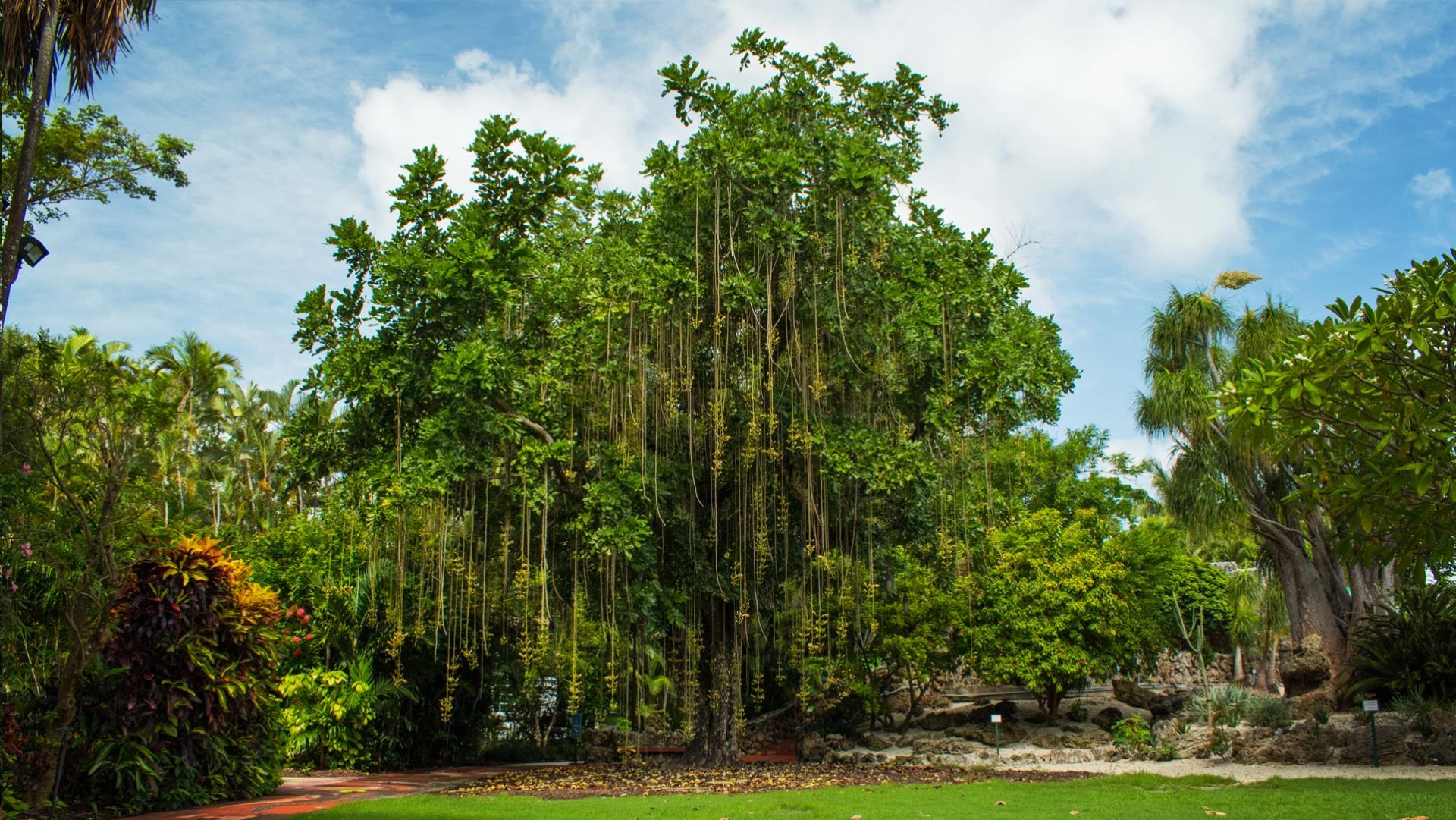
While the Gardens is home to many native species found in South Florida, the growing conditions make this area a good fit for a variety of tropical and subtropical plants from across the world. Under the name Parrot Jungle, this garden saw an introduction to eye-catching plants that had visitors amazed by their unique and unusual colors, shapes and smells. Pinecrest Gardens features several distinguishable plants that can often be found on display at botanical gardens. Walking through the gardens, visitors will get to see tropical plants from all over the world.
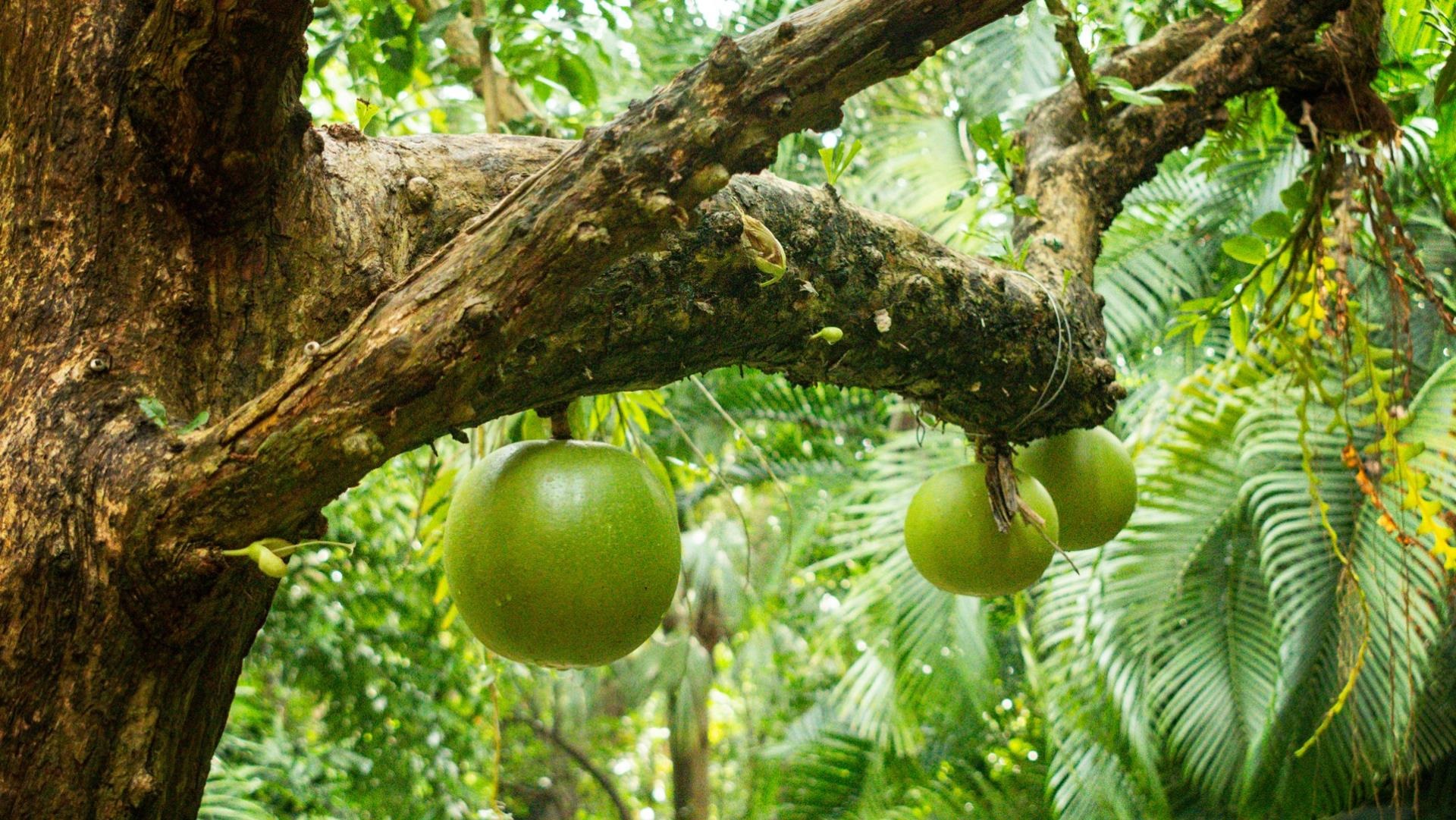
Several unusual plants have found a home at Pinecrest Garden including the African Sausage Tree, Kigelia pinnata, which provides a shady oasis at the far edge of the Meadow. Several Calabash Trees, Crescentia cujete, can be found near Cypress Hall, Splash ‘n Play, and the Terrace Ramp. This tree is known for producing a large woody fruit that inspires its’ common name. Across the lake stands a giant Talipot Palm, Corypha umbraculifera, native to India.
In the Lower Gardens, visitors can walk next to the towering Traveler’s Palms, Ravenala madagascariensis, from the island of Madagascar. The Vanuatu Fan Palm, Licuala grandis, a large-leafed palm that makes a lasting impression, is originally from the tiny islands of Vanuata off the coast of Australia. Staghorn ferns, Platycerium, from regions of Peru to Bolivia, decorate the trees throughout the trails.
It is important to note the significant role that botanical gardens have played in the introduction and movement of invasive plant species across natural habitats over time. Laws at the local, state and international level have been placed to hold entities accountable who wish to transport and distribute plant material. For plants that have already been evaluated and deemed invasive, management and restoration policies are implemented for containment or elimination.